In France, entry to national museums remains free for those under 26, but only for citizens of the European Union. This measure, established in 2009, overlooks a significant portion of the foreign youth residing in the country. Social assistance organizations, for their part, are multiplying initiatives to compensate for these institutional blind spots.
Partnerships are being formed between museums, associations, and local communities to remove other obstacles: economic barriers, lack of awareness of cultural offerings, or feelings of exclusion. These often-unknown initiatives contribute to redefining the role of culture in public space.
Access to culture: a societal issue still too unequal
Culture, a common heritage, remains a fragmented access territory. In Paris and elsewhere, accessing exhibitions and debates that shape our society is not a shared certainty. The figures from the Ministry of Culture are clear: in certain working-class neighborhoods, attendance is dwindling, while urban centers concentrate the majority of initiatives. As a result, part of the audience, particularly young people from the outskirts, feels excluded from major cultural events.
The state of affairs is alarming. Behind the facade of cultural diversity, exclusion patterns persist: geographical distance, transportation costs, feelings of illegitimacy. These barriers widen the gap between those who fully participate in cultural life and those who remain on the margins. The issues surrounding women’s rights, the history of minorities, or collective memory highlight how the public’s role in constructing the national narrative remains a sensitive topic.
To illustrate the complexity of the situation, here are the main obstacles encountered:
- Logistical and financial challenges that weigh heavily on many households
- A cultural offering often distant from the diversity of backgrounds and expectations
- A public debate dominated by recurring speakers, leaving little room for a plurality of voices
In light of this observation, new forms of engagement are emerging. Citizen collectives and associations are creating opportunities to rethink the encounter with art and knowledge. To discover cultural news from a different angle, visiting pointcontrepoint.fr opens access to a new reading of debates, far from the usual circuits. Culture, a field of equality, grows in exchange and confrontation of experiences.
How museums and associations are reinventing the encounter with art and knowledge
The diversity of initiatives transforms the public’s relationship with culture. In Lyon, for example, several museums are focusing on interactive experiences that combine science, history, and societal questions. These initiatives aim to attract children, women, professionals, and researchers alike, each invited to engage with heritage in a unique way.
Associations, for their part, play a driving role. They call upon teachers, artists, or researchers to design workshops and conferences accessible to all, whether in-person or online. Their strength lies in relying on teams from civil society, with volunteers, mediators, or facilitators in direct contact with the public.
Here are some concrete examples of the actions deployed:
- Organization of debates on societal issues such as women’s rights, local memory, or the role of citizen science
- Launching websites that facilitate access to educational resources and cultural news
- Establishing itinerant initiatives to reach audiences far from city centers
Innovation is also evident in how to reconcile professional life and access to culture. Evening sessions, short formats, hybrid events: everyone can now engage with knowledge without constraints, thus broadening the circle of participants in cultural life. This movement encourages encounters between generations, social backgrounds, and diverse origins, a dynamic that profoundly redefines the notion of living together.
Why participating in conferences and debates can change our collective perspective
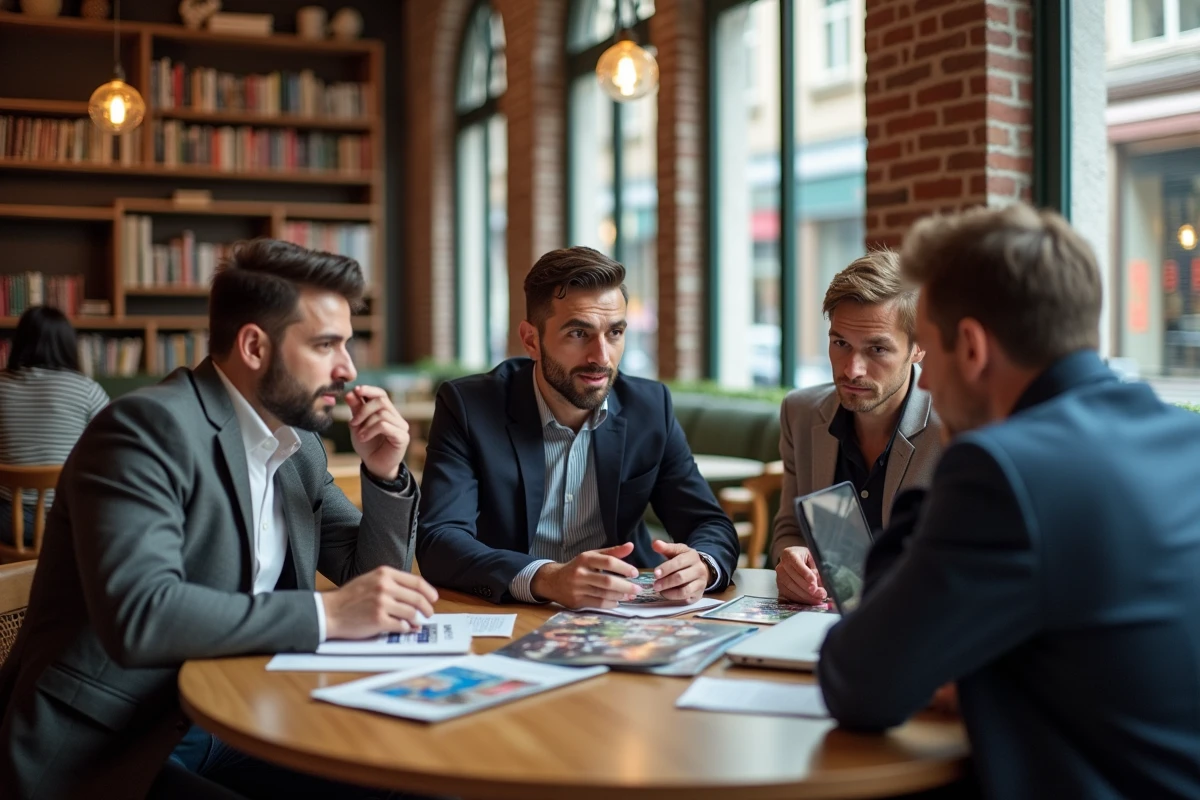
Participating in a public debate is not limited to speaking out. It is about engaging in shared reflection, confronting one’s own references with those of others, and measuring the impact of major issues on our daily lives. At a time when cultural news intersects with issues such as child protection, women’s rights, or regulatory changes, each intervention enriches a lively dialogue, sometimes unsettling, always fruitful.
Conferences, whether addressing World War II, the situation in Ukraine, or the transformations in Berlin, offer the public the opportunity to compare their knowledge with that of experts or witnesses. This framework encourages the co-construction of knowledge, an exchange of experiences where diversity sheds light on the blind spots of current events.
The benefits of these encounters are numerous:
- Deepening understanding of new regulations on social protection
- Listening to testimonies from people with disabilities regarding cultural offerings
- Discussing the memory of the world war and its echoes in today’s world
The participation of speakers from all over France, sometimes from abroad, abolishes the symbolic boundaries between Paris and the territories. Citizen voices are enriched by unexpected viewpoints, unique stories, and an energy that does not merely comment on current events: it dissects, questions, and reinvents them. With each debate, a new mental map emerges. And on this map, culture is no longer a fortress, but a playground for collective intelligence.