The quality of a garment is not just about its brand or price. It is reflected in the density of the fabric, the consistency of the seams, and the choice of raw materials. Recognizing these technical indicators before purchasing allows you to build a sustainable wardrobe where each piece ages well, is easily repaired, and retains its drape after dozens of washes.
Repairability of garments: the criterion that labels do not yet show
Classic buying guides emphasize textile composition and finishing. These criteria remain valid, but there is now an additional angle: the ability of a garment to be repaired and maintained over the long term.
The European framework ESPR (Ecodesign for Sustainable Products Regulation) plans to integrate into its requirements the lifespan, repairability, presence of concerning substances, content of recycled materials, and recyclability. Textiles are included in the work plan for 2025-2030, although no binding delegated act for clothing has yet been adopted to date.
A high-quality garment is also distinguished by concrete signs of repairability: spare buttons provided, hems with enough fabric reserve for shortening or lengthening, seams that are accessible for alterations without dismantling the entire piece.
Before buying trousers or a jacket, check if the brand offers spare parts or a repair service. This detail reflects a quality approach that goes beyond the mere sturdiness of the fabric. To learn more about What You Need to Know, the selection criteria are detailed with examples of durable pieces.
Textile composition: reading the label of a jean, trousers, or linen shirt
The composition label remains the first objective filter. However, one must know how to interpret it beyond the mention “100% cotton.”
Natural fibers and their actual behavior
Cotton, linen, and wool each offer different properties. Linen, for example, becomes softer with washing, making it a fabric that improves over time. Wool has a natural elasticity that allows it to regain its shape after stretching.
A high percentage of natural fibers does not guarantee quality on its own. Short-staple cotton will pill faster than a well-constructed cotton-polyester blend. The length of the fiber, rarely indicated on the consumer label, plays a crucial role in the fabric’s durability.
Blends to watch out for
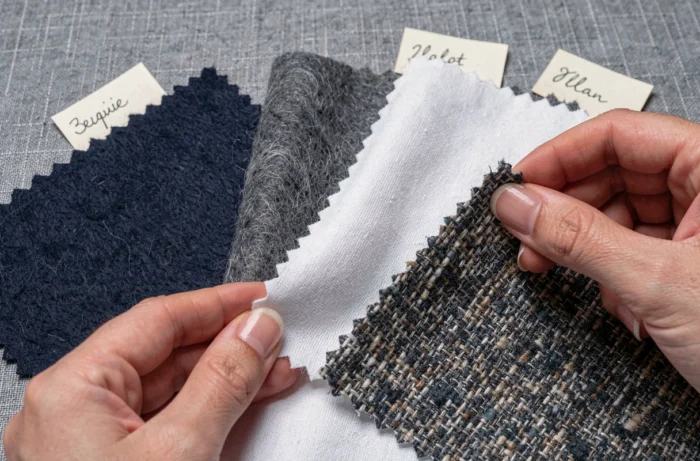
A low percentage of elastane in jeans provides comfort without degrading the fit. On the other hand, a garment whose composition exceeds half in cheap synthetic fibers (polyester, acrylic) sold as “premium” deserves caution. The touch test helps: a quality fabric has a consistent drape and a perceptible texture under your fingers, not a smooth and plastic appearance.
Finishes and seams: checks to make in the fitting room
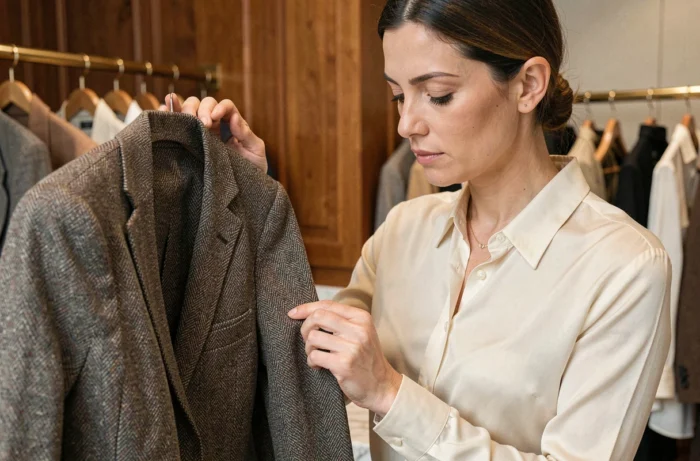
A well-cut piece can be recognized even before looking at the label. The finishes directly reflect the time and care invested in the making.
- Seams should be straight and even, with no threads sticking out. On trousers, turn the leg inside out: a flat-felled seam is more durable than a simple overlock.
- Buttonholes should be neat, with a dense thread that does not fray when touched. A button sewn with a shank (a small space between the button and the fabric) indicates careful construction.
- Hems made by hand or with an invisible stitch indicate a higher level of finishing than a simple fusible hem, which may come undone in the wash.
- Pattern matching at seams (stripes, checks) is a sign of precise pattern-making. Aligning a pattern costs fabric and time, which budget brands tend to avoid.
These checks take less than a minute in the fitting room and help eliminate a large portion of mediocre pieces, regardless of the displayed price.
Choosing basic men’s or women’s pieces: the items that structure a wardrobe
Accumulating quality garments without coherence does not build a style. The reverse logic works better: identify the pieces worn most often, then focus the budget on their quality.
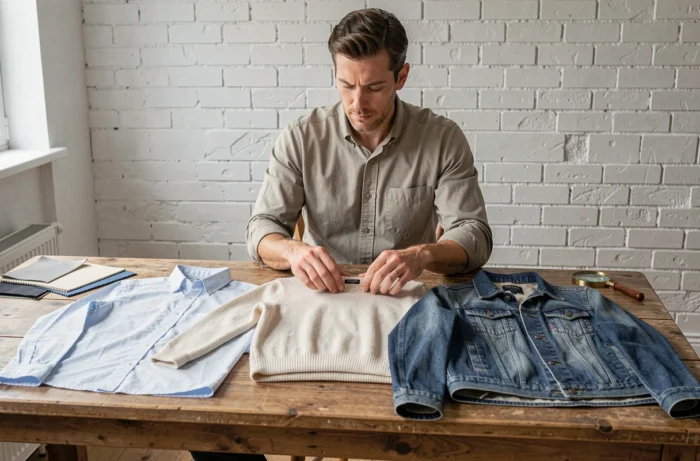
A well-cut jean, lightweight wool trousers, a pair of full-grain leather shoes, and two cotton or linen shirts cover the majority of everyday outfits. Investing in these basics significantly reduces the cost per wear compared to trendy pieces worn only a few times.
For shoes, the method of construction is a reliable indicator. A pair made with Goodyear welted or Blake stitched construction can be resoled, which doubles or triples its lifespan compared to glued shoes. Full-grain leather, not sanded on the surface, develops a patina over time instead of cracking.
The trap of overquality
Not all items justify the same level of investment. A t-shirt worn under a jacket does not need the same level of finishing as a visible shirt. Adapting the level of demand to the actual use of each piece avoids spending without noticeable gain.
Digital passport for textile products: a future criterion for transparency
The European Union is working on establishing a digital product passport that will gradually cover textiles. This system aims to make information about the composition, origin, manufacturing conditions, and recyclability of a garment accessible, for example, via a QR code.
The mandatory application date for clothing has not yet been definitively set. The deadlines sometimes announced correspond to projected work schedules, not to obligations already in force. A QR code or a promise of traceability displayed by a brand does not yet constitute a regulatory proof of quality.
What matters right now: brands that voluntarily document their production chain send a signal of transparency. Those that publish their manufacturing locations, their fabric suppliers, and their policy regarding unsold items demonstrate a verifiable commitment, well before any legal obligation.
Recognizing a high-quality garment relies on simple gestures, repeated with each purchase: turning the garment inside out, reading the composition, testing the drape, checking the seams, and questioning the repairability of the piece. These reflexes matter more than the price or the reputation of a brand.